









IJMRR - International Journal of Multidisciplinary Research & Reviews
Int. J. Multidiscip. Res. Rev.
DOI Prefix: 10.56815
I J M R R
Int. J. Multidiscip. Res. Rev.

International Journal of Multidisciplinary Research & Reviews

Peer Reviewed | Multidisciplinary | UGC Aligned | C | O | P | E Ethical Standard

ISSN: 2945-3135 | Digital Archiving | CrossRef Member
IJMRR - International Journal of Multidisciplinary Research & Reviews

International Journal of Multidisciplinary Research & Reviews

Peer Reviewed · Multidisciplinary · UGC Aligned · C | O | P | E Ethical Standard

ISSN: 2945-3135 | Digital Archiving | CrossRef Member
DOI DOI Prefix: 10.56815
ISSN
2945-3135
Digital
Archiving
CrossRef
Member

Peer Reviewed  |  Multidisciplinary  |  UGC Aligned  |  C | O | P | E Ethical Standard

RESEARCH FOR A BETTER TOMORROW

Welcome to International Journal of
Multidisciplinary Research & Reviews
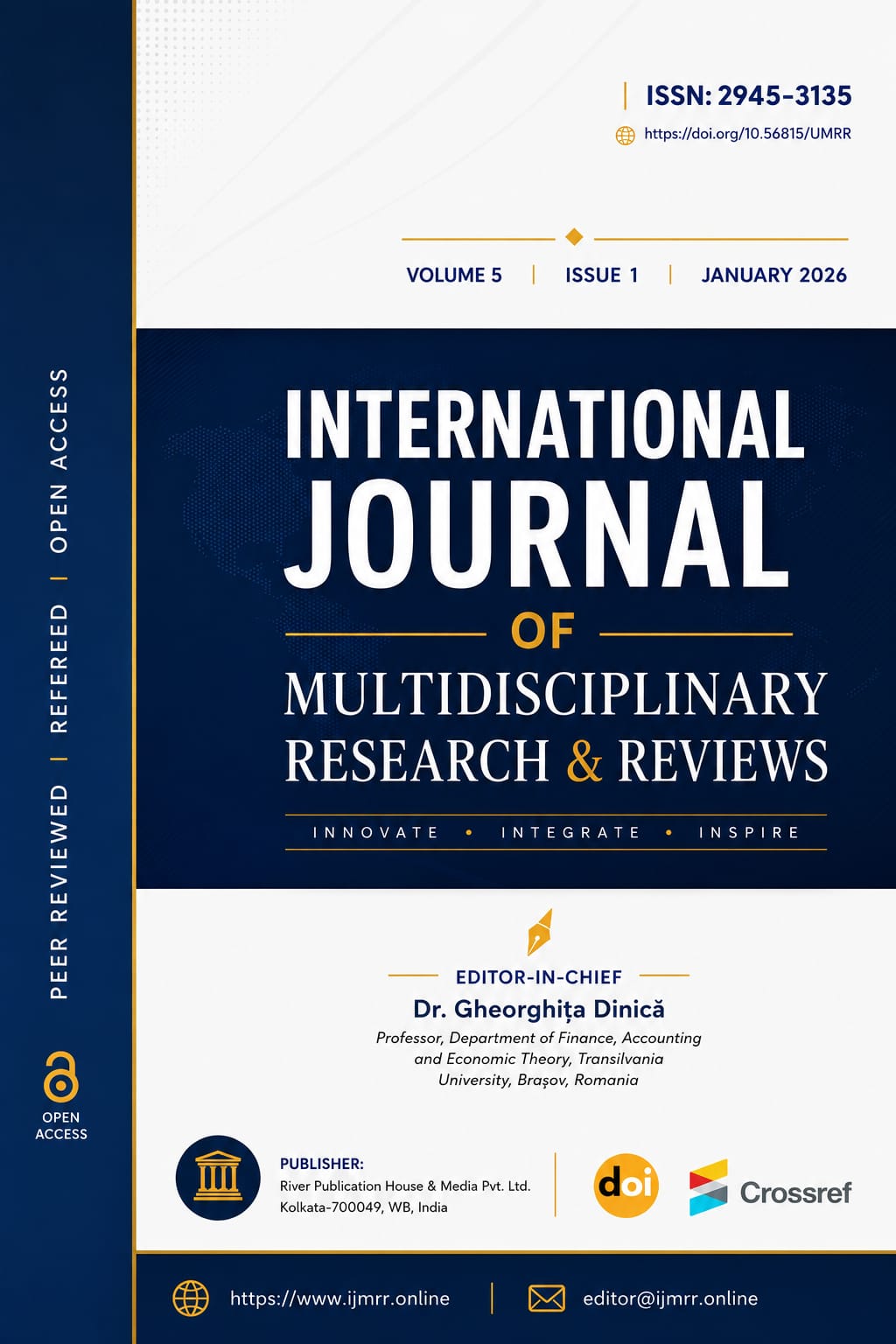
IJMRR Journal Cover Page

International Journal of Multidisciplinary Research & Reviews (ISSN: 2945-3135) is a Peer Reviewed, Referred, Multidisciplinary, Open Access, Scientific Journal. The journal scope includes wide multidisciplinary areas- Arts, Social science & Humanities, Management, Economics, Finance, Tourism, Law, Education, Science & Technology, Pure Science, Applied Science, Engineering ( General & Core), Earth Science, Space Science, Material science, Energy, Medical Science, Life Science, Pharmacy, Dentistry, Nursing, Health Science. The journal releases Monthly publication (Four issues in a year).

The journal encourages submission of high quality Review article, Research article, Case studies, Short communication, Letter to the editor, Brief report, Registered report, Method and methodologies, Posters, Slide notes, and Conference materials. The submission should be original, Scientific and useful for readers.

IJMRR follows ethical guidelines recommended by Committee on Publication Ethics (COPE) and University Grant Commission (UGC). The Journal recommends use of leading and trusted tools (Turnitin, Drillbit, i-thenticate) for originality checking.

The journal comprises of top class editorial board and reviewer panel across the world covering wide spectrum of fields. The journal scope is divided into five major sections (A,B,C,D,and E) considering the panoramic expert panel and broad scope of the journal. The journal covers wide fields of Arts, Humanities, Social Sciences, Management, Economics, Finance, Accounting, Business Studies, Law, Mathematics, Physics, Statistics, Astrophysics, Oceanography, Geology, Chemistry, Biological science, Agricultural Science, Food Science, Nutrition, Biochemistry, Bio-informatics, Biomedical science, Veterinary Science, Molecular Biology, Biotechnology, Environmental sciences, Plant Sciences, General Engineering, Core Engineering, Interdisciplinary work in science and Technology Medicine, Surgery, Pharmacy, Dental, Nursing and other scientific areas. The journal encourages scientific studies in the field of Psychology, Psychiatry, Yoga, Ayurveda, and other emerging areas of Social science, Pure Science, Engineering, Technology, and Medical sciences.

The journal also consider useful scientific study of negative findings.The scope includes above field but not limited.

Journal Analytics

ISSN 2945-3135
Frequency Monthly
Scope Multidisciplinary
Review Process Peer Reviewed
Access Policy Open Access
Crossref Member Yes
DOI Prefix 10.56815
Archiving Portico (USA)
Copyright & Licensing Yes
Advertisement Policy Yes

Database Metrics

Google Scholar
Researcher ID
Crossmark Updates
DOI Registered
ORCID
ResearchGate
Academia.edu
LinkedIn
Mendeley
Dimensions
Certificates
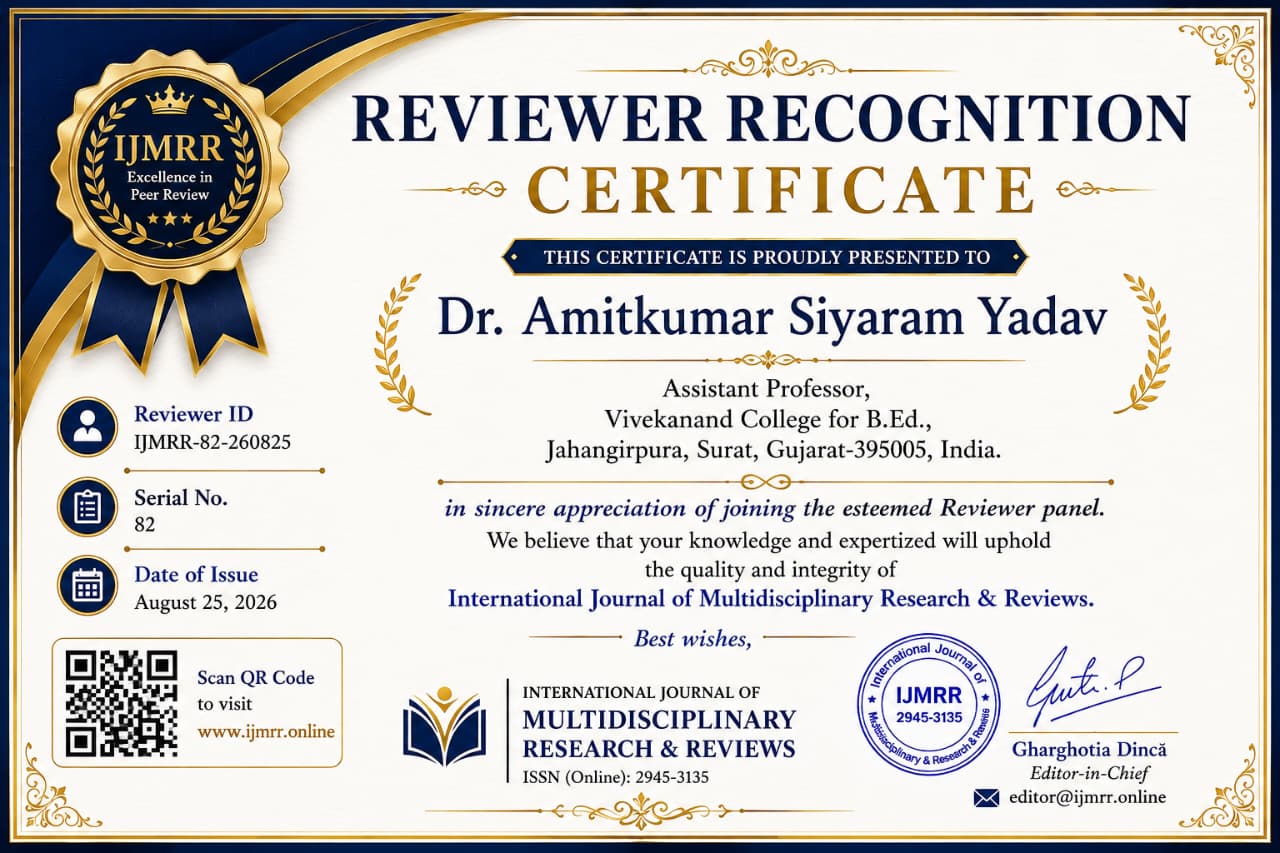
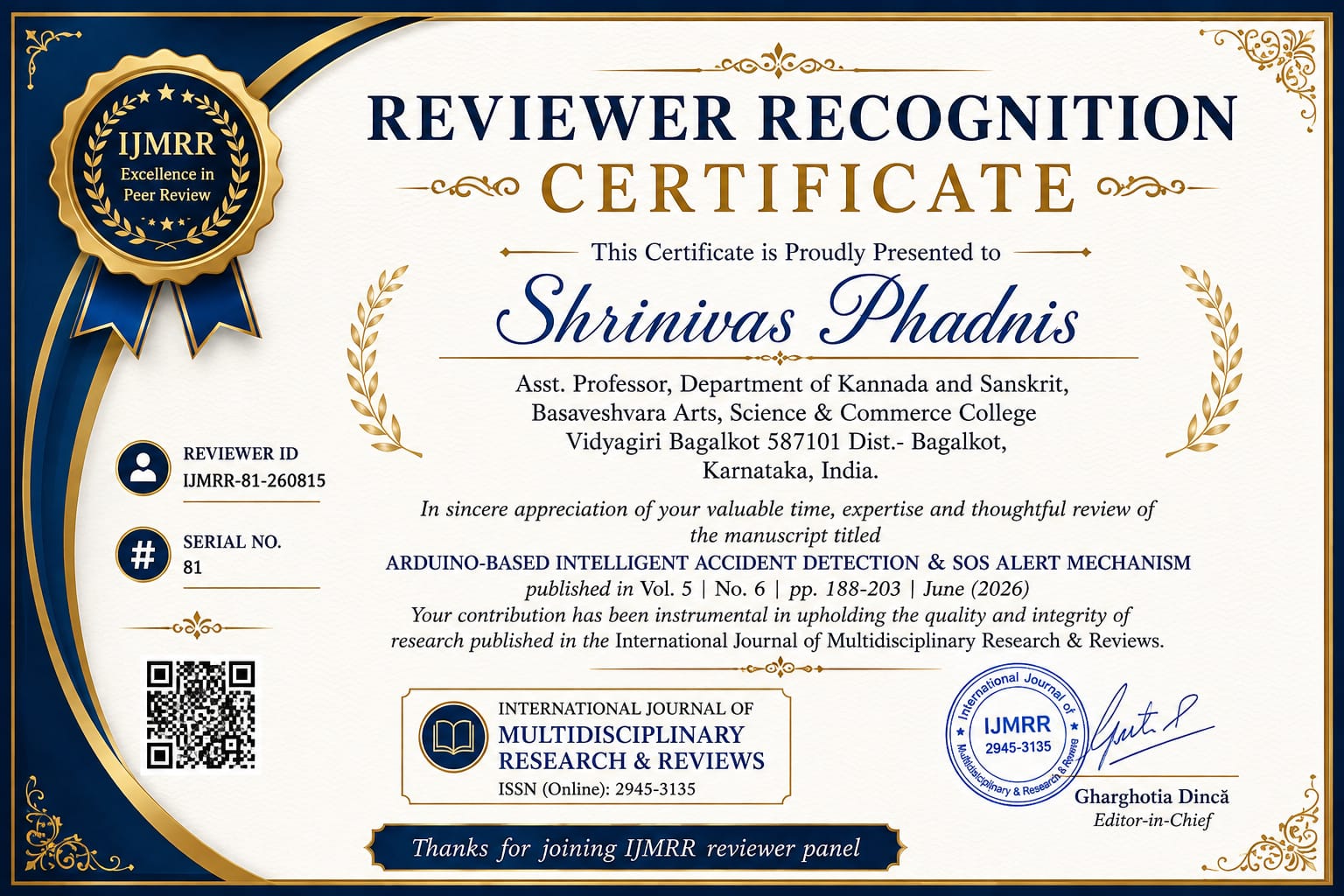
Reviewer Official Certificate-1

Reviewer Official Certificate-1

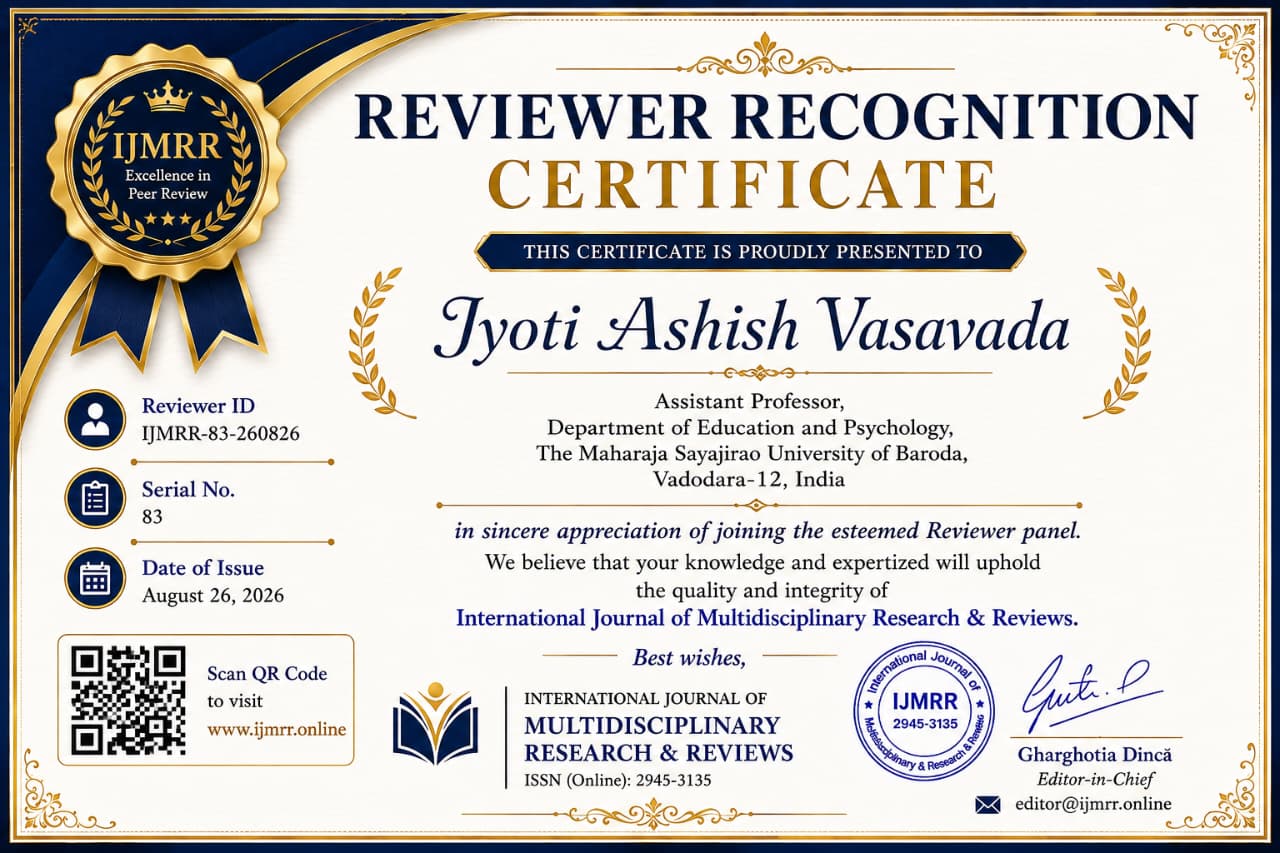
Reviewer Official Certificate-2
Reviewer Official Certificate-2

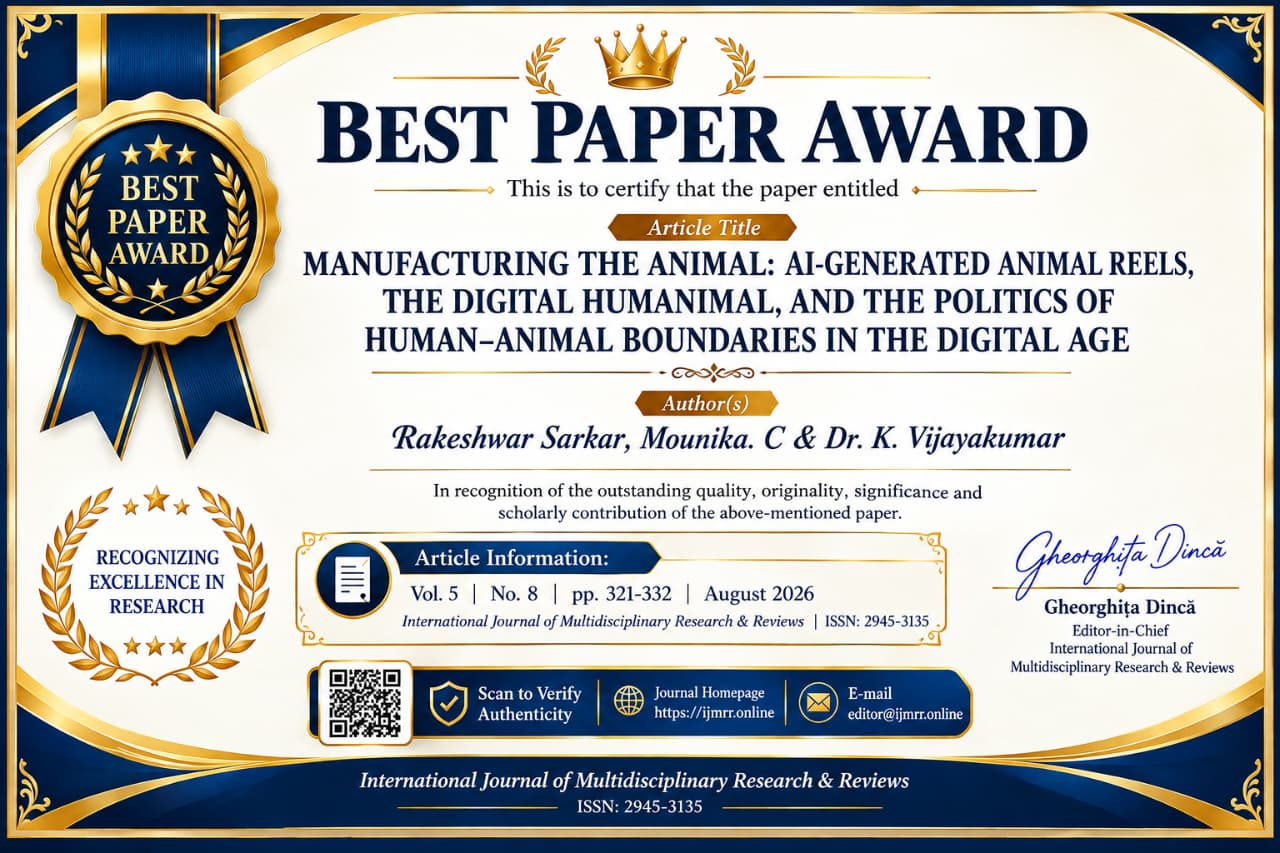
Best Paper Award Certificate- Aug 2026
Best Paper Award Certificate- Aug 2026

Reviewer Official Certificate-3

Reviewer Official Certificate-3

Current Issue
Abstract

This paper studies eight large Nasdaq firms looking at board size, board diversity, and constructs of board governance to understand the implications on financial and strategic performance. Data used include the 2024 proxies for board size, women directors and board independence, and the FY 2024 Form 10-K for revenue growth, net income, and total assets and total equity. The representation of women is expressed as the number of women directors divided by the total number of directors. ROA and ROE are calculated by net income divided by average total assets and average total equity, respectively. Sample firms exhibit a mean of 32.29% representation of women on boards and a mean of 84.85% of board independence. The impacts of women representation on ROA, ROE and revenue growth were found to be small and insignificant. The impacts of board independence on ROA and ROE are positive and small, but weak and insignificant. The findings do not support the claim that improving board diversity would lead to better firm performance over a short time. Rather, a best-practices approach to board composition that combines diversity, independence, and governance would be firm-specific and would depend on the industry and the quality of board process.

Keywords: Board Diversity; Gender Representation; Corporate Governance; Board Independence; Strategic Decision-Making; Roa; Nasdaq Firms
How to cite :
Tulika Dutta Roy (2026). DIVERSE BOARDS AND EFFECTIVE GOVERNANCE: AN ANALYSIS OF GENDER REPRESENTATION, EXPERTISE, CULTURAL DIVERSITY, STRATEGIC DECISION-MAKING, AND CORPORATE PERFORMANCE. International Journal of Multidisciplinary Research & Reviews, 5(9), 1-12. https://doi.org/10.56815/ijmrr.v5i9.2026.1-12
13-25
375 VIEWS
6 DOWNLOADS
Abstract

This paper explores the representation of racism in media and its impact on young women in society. Media, being a powerful tool of communication, significantly shapes public perception and plays a crucial role in reinforcing or challenging racial stereotypes. The portrayal of racial minorities, particularly in news outlets, television, films, and social media, often perpetuates negative stereotypes that contribute to systemic racism. This paper focuses on how such representations influence the self-perception, mental health, and societal participation of young women, especially those from racial minorities. It also addresses the media's role in shaping young women's understanding of race, identity, and social justice. The study emphasizes the importance of creating more inclusive and accurate media portrayals to reduce the adverse effects of racism on young women and promote a more equitable society. In the context of young women, the impact of media on their understanding of race and racism goes beyond personal identity and self-perception; it also influences their worldview and how they engage with social justice issues. As young women navigate their educational and professional environments, their exposure to media representations of race can shape their understanding of racial hierarchies, power structures, and social justice.

Keywords: Racism In Media Young Women Stereotypes Media Representation Mental Health Social Justice
How to cite :
Vijayalakshmi. N. & Narayanaswamy. A. M. (2026). REPRESENTATION OF RACISM IN MEDIA AND ITS IMPACT ON YOUNG WOMEN IN SOCIETY. International Journal of Multidisciplinary Research & Reviews, 5(9), 13-25. https://doi.org/10.56815/ijmrr.v5i9.2026.13-25
26-37
382 VIEWS
3 DOWNLOADS
Abstract

We will focus on standard hot Big-Bang models involving rotating viscous fluid leading to new interesting solutions. Their properties will be studied from various respective thereby obtaining new idea and information’s regarding the evolutions of the universe. Investigation will also be made as to when the universe ceased to be radiation-dominated and become matter – dominated, pointing out the advantages of our model over the Friedman model.

Keywords: Big Bang Model Radiationdominated Cosmological Constant Roberstson-Walker Metric Comic Fluid EnergyMomentum Tensor Newtonian Limit Perfect Dragging
How to cite :
Naorem Jugeshwor Singh & Akoijam Kesho Singh (2026). ROTATIONAL PERTURBATION OF HOT BIG BANG VISCOUS FLIUD MODEL UNIVERSES COUPLED WITH SCALAR FIELD. International Journal of Multidisciplinary Research & Reviews, 5(9), 26-37. https://doi.org/10.56815/ijmrr.v5i9.2026.26-37
38-42
412 VIEWS
5 DOWNLOADS
Abstract

Aplastic anemia is a rare disease in which the bone marrow and the hematopoietic stem cells that reside in it are damaged. This causes a deficiency of all three blood cell types (pancytopenia): red blood cells (anemia), white blood cells (leukopenia), and platelets (thrombocytopenia). Aplastic refers to the inability of the stem cells to generate mature blood cells. This review shows that Homeopathy medicines and treatment for aplastic anemia has proved to be highly effective.

Keywords: Aplastic Anaemia Homeopathy Bone Marrow
How to cite :
Dr. Bhasker Sharma (2026). APLASTIC ANAEMIA IN HOMEOPATHY: A REVIEW. International Journal of Multidisciplinary Research & Reviews, 5(9), 38-42. https://doi.org/10.56815/ijmrr.v5i9.2026.38-42
Abstract

Global warming is no longer merely an environmental or atmospheric phenomenon; it is an increasingly profound anthropological challenge affecting human health, livelihoods, migration, settlement, food systems, cultural practices, social institutions and relations between humans and the environment. Europe provides a particularly significant case because it is the fastest-warming continent, with climate risks increasingly affecting ecosystems, infrastructure, water resources, food and energy security, economies and human health. The European State of the Climate 2025 reports that Europe continued to experience exceptional warming, with heatwaves extending from the Arctic to the Mediterranean, record-high sea-surface temperatures and the largest area burned by wildfires on record. This chapter examines global warming in Europe through an anthropological lens, moving beyond purely technological and economic explanations. It explores how climate change interacts with culture, social inequality, political economy, indigenous and local ecological knowledge, migration, urbanisation, consumption and human adaptation. Drawing upon environmental anthropology, political ecology, cultural ecology, climate anthropology and resilience theory, the chapter argues that Europe cannot “escape” global warming through technological solutions alone. Rather, climate resilience requires a transformation of human-environment relationships, consumption patterns, institutions and cultural values. The chapter proposes an anthropological framework based on mitigation, adaptation, ecological restoration, climate justice, local knowledge, community participation and intergenerational responsibility. It concludes that Europe’s pathway out of the climate crisis must be simultaneously ecological, technological, cultural and ethical. 

How to cite :
Dr. Lalit Shrestha (2026). GLOBAL WARMING AND THE HUMAN FUTURE IN EUROPE: AN ANTHROPOLOGICAL APPROACH TO CLIMATE ADAPTATION, CULTURAL RESILIENCE AND SUSTAINABLE TRANSFORMATION. International Journal of Multidisciplinary Research & Reviews, 5(9), 43-55. https://doi.org/10.56815/ijmrr.v5i9.2026.43-55
Abstract

Garden or orchard farming, comprising fruit crops such as mango and guava along with allied horticultural produce, has emerged as an important source of livelihood diversification for farmers in the semi-arid tracts of western Uttar Pradesh. This paper examines the economic condition of farmers engaged in garden/orchard cultivation in Hathras district, with a focus on land holding pattern, cropping structure, income levels, and the constraints faced by growers. The study is based on primary data collected from a sample of 150 garden farmers through a structured schedule, supplemented by a comparison group of 150 traditional (field-crop) farmers, and is analysed using descriptive statistics, the independent-samples t-test, Karl Pearson's coefficient of correlation, and the chi-square test of association. The results indicate that garden farmers earn a significantly higher mean annual income (₹1,85,000) than traditional crop farmers (₹1,42,000), that farm size is positively and significantly correlated with income (r = 0.62), and that farm-size category is significantly associated with income category (χ² = 61.67, df = 4, p < 0.01). However, inadequate irrigation, exploitation by intermediaries, absence of cold-storage infrastructure, and limited institutional credit continue to constrain the sector. The paper concludes with policy suggestions for strengthening horticultural marketing, credit, and processing infrastructure in the district.

How to cite :
Dushyant Kumar & Prof. (Dr.) Satyavrat Singh Rawat (2026). A STUDY OF ECONOMIC CONDITION OF THE FARMERS IN THE GARDEN AREA WITH SPECIAL REFERENCE TO HATHRAS DISTRICT, UTTAR PRADESH, INDIA. International Journal of Multidisciplinary Research & Reviews, 5(9), 56-66. https://doi.org/10.56815/ijmrr.v5i9.2026.56-66
67-75
22 VIEWS
1 DOWNLOADS
Abstract

Sustainable employee behaviour has become increasingly important in the retail sector as organizations seek to reduce environmental impacts and integrate sustainability into their everyday operations. Employees play a crucial role in achieving organizational sustainability because their routine decisions and workplace practices directly influence resource consumption, waste management, energy conservation, and the implementation of environmental initiatives. The purpose of conducting this research is to examine the Drivers of Sustainable Employee Behaviour in Retail. The technique used in the study is one sample t-test. It was found that Environmental Awareness, Environmental Knowledge, Employee Attitude towards Sustainability, Organizational Environmental Culture, Management Support, Green Training and Development, Green Rewards and Recognition, Employee Engagement, Green Organizational Policies and Practices, Availability of Sustainable Resources and Facilities, Green Leadership, Peer and Co-worker Influence, Perceived Environmental Responsibility and Workplace Sustainability Motivation are signifiacnt Drivers of Sustainable Employee Behaviour in Retail. The study concludes that an integrated organizational approach combining employee motivation with supportive management practices and appropriate sustainability infrastructure can contribute significantly to strengthening sustainable employee behaviour in retail organizations.

How to cite :
InsiaFatema Adil Pirani & Dr. Mahadev. P. Dhere (2026). DRIVERS OF SUSTAINABLE EMPLOYEE BEHAVIOUR IN RETAIL: A STUDY OF MINIATURE MALL EMPLOYEES. International Journal of Multidisciplinary Research & Reviews, 5(9), 67-75. https://doi.org/10.56815/ijmrr.v5i9.2026.67-75
76-93
28 VIEWS
3 DOWNLOADS
Abstract

This paper attempts to analyze the political trajectory of the Ao Naga women. The journey of women into the political sphere has been challenging across the globe. In Naga society too, the inclusion of women in politics has been achieved after years of persistent struggle and being secured with their right to participate in politics. Despite traditional Naga society being often described as democratic and republican, it is more often than not governed by customary laws that strictly prohibited women from engaging in political activities by stating that it would infringe on Naga customary laws and tradition as protected under Article 371(A) of the constitution of India. The recent issue of reservation for women in urban local bodies was responsible for the disturbances in the state of Nagaland. After amendment to the constitution in 1992 the central government provides 33% reservation for women in municipalities. However, Nagaland Assembly has passed another Act called, Municipal and Town Council Act in 2001 which opposed reservations in urban local bodies for the Women. However, when it comes to women and politics, the Ao Naga women have limited rights as compared to men in decision making role in the society at large. Therefore, this paper is an attempt to understand the question of whether the Ao Naga community men in Mokokchung town are ready to be flexible in their customary law and allow women’s participation in all political and decision-making processes. 

How to cite :
Dr. Imtirenla Longkumer, Dr. M. Roja Lakshmi & Lanusama Longkumer (2026). INDIGENOUS WOMEN AND POLITICAL PARTICIPATION: A MICRO STUDY OF THE TRAJECTORY OF AO WOMEN POLITICAL REPRESENTATION IN MOKOKCHUNG TOWN, NAGALAND. International Journal of Multidisciplinary Research & Reviews, 5(9), 76-93. https://doi.org/10.56815/ijmrr.v5i9.2026.76-93
Abstract

The introduction of the concessional New Tax Regime under Section 115BAC of the Income Tax Act, 1961, and its designation as the default regime from Assessment Year 2024-25, represents one of the most significant structural changes to India’s personal income tax system in recent years, offering individual taxpayers lower slab rates in exchange for foregoing most exemptions and deductions. This study empirically examines the impact of the New Tax Regime on individual taxpayers, comparing tax liability and taxsaving behaviour between the Old and New regimes. Using a structured questionnaire administered to 386 individual taxpayers selected through stratified convenience sampling, the study collects self-reported tax liability under both regimes and measures a composite Tax-Saving Behaviour Score capturing participation in Section 80C, 80D, HRA, home loan interest, and NPS tax-saving instruments. Paired-samples t-tests, independent-samples ttests, correlation analysis, multiple regression, and chi-square tests are employed to test the hypotheses. Findings indicate that mean tax liability under the New Regime is significantly lower than under the Old Regime across all income slabs (paired t = 18.62, p < 0.05), and that New Regime adopters report a significantly lower Tax-Saving Behaviour Score (mean = 42.8) than those retaining the Old Regime (mean = 71.4, independent t = 21.47, p < 0.05), indicating a measurable decline in tax-linked investment activity. Amount of tax saved and simplicity of compliance emerge as the strongest predictors of regime choice, while complexity of comparative calculation and lack of awareness remain the leading barriers to informed regime evaluation. The study concludes with policy and advisory implications for taxpayers, tax practitioners, and policymakers. 

How to cite :
Mruthunjaya A (2026). IMPACT OF THE NEW INCOME TAX REGIME ON INDIVIDUAL TAXPAYERS: A COMPARATIVE STUDY OF TAX LIABILITY AND TAX-SAVING BEHAVIOUR. International Journal of Multidisciplinary Research & Reviews, 5(9), 94-106. https://doi.org/10.56815/ijmrr.v5i9.2026.94-106
107-116
28 VIEWS
3 DOWNLOADS
Abstract

Northeast India has become a key focus of India's inclusive growth policy. The region, which includes eight states – Arunachal Pradesh, Assam, Manipur, Meghalaya, Mizoram, Nagaland, Sikkim and Tripura – is seeing a rise in entrepreneurial activities backed by various initiatives of the central and state governments like Start-up India, PM-DevINE and NEDFi. But the failure rate of entrepreneurs is still alarmingly high and it is estimated that 60-70% of startups become dormant within three years. Existing literature has focused on financial limitations and infrastructural gaps as the reasons for failure, but this theoretical paper suggests that the key, but under-researched, factor for entrepreneurial sustainability in the region is Human Resource Management. The paper, which integrates four dominant theoretical lenses (Human Capital Theory, Resource Based View, Institutional Theory and Social Capital Theory), proposes a Community-Embedded HRM Model for Entrepreneurial Growth specific to the socio-cultural context of Northeast India. The paper identifies four HRM dimensions - culturally sensitive recruitment and selection, localized and hybrid skill development, community-based retention and welfare, and participative, council-based leadership - as direct drivers of entrepreneurial performance. Affective commitment and innovative work behaviour mediate the relationship, and institutional support moderates the relationship. This paper contributes to theory by situating mainstream HRMentrepreneurship linkage in a collectivist and tribal-dominated context and offers practical implications for entrepreneurs, incubators and policy makers.

How to cite :
G. Marimuthu, S.A Mozumder*, Faizan Khan Sherwani & Mihir Kumar Shome (2026). HUMAN RESOURCE MANAGEMENT AND ENTREPRENEURSHIP DEVELOPMENT IN NORTHEAST INDIA: A THEORETICAL INTEGRATION AND CONCEPTUAL MODEL. International Journal of Multidisciplinary Research & Reviews, 5(9), 107-116. https://doi.org/10.56815/ijmrr.v5i9.2026.107-116
Abstract

F. Scott Fitzgerald’s The Beautiful and Damned (1922) is frequently read as a novel of Jazz Age decadence, privileged youth, alcoholism, romantic disillusionment, and the moral exhaustion of the American leisure class. Such a reading, however, risks reducing the novel to a period piece. A closer interpretation reveals a much more durable social anatomy: Fitzgerald examines what happens when inherited wealth substitutes for vocation, when beauty becomes a form of social capital, when marriage becomes entangled with property, and when the desire for pleasure gradually consumes the capacity for meaningful action. This review reads the novel through literary, sociological, anthropological, and philosophical frameworks. Thorstein Veblen’s theory of conspicuous consumption, Georg Simmel’s analysis of metropolitan modernity, Émile Durkheim’s concept of anomie, Max Weber’s account of status and rationalization, Pierre Bourdieu’s theory of distinction and cultural capital, Erving Goffman’s dramaturgical sociology, Mary Douglas’s anthropology of classification, and Marcel Mauss’s theory of exchange illuminate different dimensions of Fitzgerald’s world. The review also places the novel beside contemporary cultures of consumption, celebrity, curated identity, inherited privilege, and digital self-display. Rather than treating Anthony Patch and Gloria Gilbert simply as morally defective individuals, the review argues that they are products and performers of a social system in which desire has become detached from purpose. The novel’s enduring importance lies precisely here: its “beautiful” surfaces conceal a structure of social, psychological, economic, and cultural baggage that modern societies have not entirely discarded. 

Keywords: F. Scott Fitzgerald The Beautiful and Damned Modernity Consumption Social Class Inheritance Decadence Sociology Anthropology Cultural Capital Anomie American Literature
How to cite :
Srija Chakraborty (2026). [11] A CRITICAL REVIEW OF F. SCOTT FITZGERALD’S THE BEAUTIFUL AND DAMNED: BEAUTY, INHERITANCE, CONSUMPTION, AND THE SOCIAL BAGGAGE OF MODERNITY. International Journal of Multidisciplinary Research & Reviews, 5(9), 117-126. https://doi.org/10.56815/ijmrr.v5i9.2026.117-126
Abstract

Quick commerce (q-commerce) has redefined grocery and convenience retailing in India by compressing delivery windows to ten-twenty minutes through dense networks of dark stores. As speed converges across competitors, service quality before and after the transaction is emerging as the key differentiator. This study examines the relative contribution of presales and after-sales service quality dimensions to customer satisfaction across five leading q-commerce platforms in Bangalore — Blinkit, Zepto, Swiggy Instamart, BigBasket Now, and Flipkart Minutes. A structured questionnaire was administered to 250 active users (50 per platform), and data were analysed using descriptive statistics, Pearson correlation, multiple regression, and one-way ANOVA. Both pre-sales and after-sales service quality emerged as significant positive predictors of satisfaction, with aftersales quality exerting a marginally stronger effect. Platforms differed significantly on returns/refunds and complaint resolution despite broadly similar overall satisfaction. The study concludes with managerial implications for differentiating on service quality rather than delivery speed alone, along with limitations and directions for future research. 

Keywords: Quick Commerce; Pre-Sales Service Quality; After-Sales Service Quality; Customer Satisfaction; Bangalore City
How to cite :
Ranjith M, Dhakshayini V & Poornima K (2026). [12] IMPACT OF PRE-SALES AND AFTER-SALES SERVICE QUALITY ON CUSTOMER SATISFACTION IN QUICK COMMERCE PLATFORMS. International Journal of Multidisciplinary Research & Reviews, 5(9), 127-136. https://doi.org/10.56815/ijmrr.v5i9.2026.127-136
137-148
24 VIEWS
4 DOWNLOADS
Abstract

Dividend policy remains one of the most extensively debated topics in corporate finance, with theoretical positions ranging from Miller and Modigliani’s dividend irrelevance proposition to the bird-in-hand and signalling theories that argue dividends materially affect firm value. This study empirically examines the impact of dividend policy on firm market value among NSE-listed Information Technology companies in India, using panel data from ten NIFTY IT index constituent companies over FY 2015-16 to FY 2024-25 (100 firm-year observations). Firm market value is measured using Tobin’s Q, while dividend policy is captured through the Dividend Payout Ratio (DPR) and Dividend Yield (DY), alongside firm size, profitability, leverage, and growth as controls. Descriptive statistics, correlation analysis, a Hausman specification test, and Fixed Effects panel regression are employed to test the hypotheses. Findings indicate that DPR has a significant positive impact on Tobin’s Q (β = 0.31, p < 0.05), while DY shows a significant negative association (β = -0.19, p < 0.05), alongside significant effects of profitability, firm size, leverage, and growth; the Hausman test confirms Fixed Effects as the appropriate specification. These results suggest dividend policy is not irrelevant to firm valuation among Indian IT companies, and that payout level and yield operate through distinct valuation channels. The study concludes with implications for corporate financial managers and investors in India’s IT sector. 

Keywords: Dividend Policy; Firm Market Value; Tobin’s Q; NSE-Listed IT Companies; Panel Regression
How to cite :
Geetha H N¹, Rukmini R² & Sunil G E³ (2026). [13] THE IMPACT OF DIVIDEND POLICY ON FIRM MARKET VALUE: EVIDENCE FROM NSE-LISTED IT COMPANIES IN INDIA. International Journal of Multidisciplinary Research & Reviews, 5(9), 137-148. https://doi.org/10.56815/ijmrr.v5i9.2026.137-148
Abstract

The rapid growth of India’s quick-commerce and online grocery segment has intensified competition among major platforms — BigBasket, Blinkit, Swiggy Instamart, and Zepto. Customer retention has emerged as a critical determinant of long-term profitability in a market characterised by low switching costs and aggressive price competition. This study examines and compares the retention strategies of these four platforms in Bangalore. Employing a mixed-methods design, primary data were collected through a structured questionnaire administered to 320 respondents, supplemented by platform analytics, loyalty programme documentation, and managerial interviews, evaluating retention across six dimensions via a novel Customer Retention Quality Index (CRQI). Findings reveal that BigBasket leads in loyalty depth and assortment breadth, while Blinkit and Zepto dominate on speed and Gen-Z appeal; Swiggy Instamart leverages ecosystem lock-in through its super-app strategy. The study identifies significant gaps in postpurchase engagement, grievance resolution, and hyper-local personalisation across all platforms, and presents actionable recommendations for platform managers, investors, and policymakers, contributing a multi-dimensional benchmarking framework applicable to emerging quick-commerce markets globally. 

Keywords: Customer Retention; Quick Commerce; Online Grocery; Bangalore; Loyalty Programmes
How to cite :
Sunil G E¹, Jayanandhini C² & P Ananya³ (2026). [14] CUSTOMER RETENTION STRATEGIES IN ONLINE GROCERY PLATFORMS: A COMPARATIVE STUDY OF BIGBASKET, BLINKIT, SWIGGY INSTAMART, AND ZEPTO IN BANGALORE CITY. International Journal of Multidisciplinary Research & Reviews, 5(9), 149-160. https://doi.org/10.56815/ijmrr.v5i9.2026.149-160
Abstract

Contemporary Indian English literature has witnessed a sustained and diverse engagement with myth, epic, and folk tradition, ranging from feminist revisionist retellings of the Mahabharata and Ramayana to popular mythological fiction, allegorical historical fiction, and dramatic reworkings of Sanskrit and folk narrative sources. This paper examines how contemporary Indian English writers reimagine myth and tradition not as nostalgic retreat but as an active, contested site through which modernity, gender, caste, political history, and cultural identity are negotiated. Drawing on myth criticism, postcolonial theory, and Indian literary scholarship, the paper undertakes a qualitative, thematic analysis of selected major works — including Chitra Banerjee Divakaruni's The Palace of Illusions, Kavita Kane's Karna's Wife, Salman Rushdie's Midnight's Children, Amish Tripathi's Shiva Trilogy, Ashok Banker's Ramayana series, Girish Karnad's Hayavadana and Naga-Mandala, and Arundhati Roy's The God of Small Things — organised around four recurring strategies: feminist mythological revisionism, myth as political and historical allegory, popular reinvention of epic narrative, and dramatization of folk tradition. The paper argues that these texts collectively demonstrate what Homi Bhabha terms cultural hybridity: myth and tradition are continuously reworked, translated, and contested rather than rejected or preserved unchanged, becoming a flexible discursive resource through which writers negotiate inherited narrative and modern consciousness. The paper concludes that this reimagining constitutes a distinctive, ongoing feature of Indian English literary production, with significant implications for how cultural identity is narrated in a postcolonial, globalising literary marketplace. 

Keywords: Myth Tradition Indian English Literature Cultural Identity Postcolonial Hybridity
How to cite :
Likhitha P (2026). [15] REIMAGINING MYTH AND TRADITION IN CONTEMPORARY INDIAN ENGLISH LITERATURE: NEGOTIATING MODERNITY AND CULTURAL IDENTITY. International Journal of Multidisciplinary Research & Reviews, 5(9), 161-170. https://doi.org/10.56815/ijmrr.v5i9.2026.161-170
Abstract

Financial literacy — the ability to understand and apply concepts such as interest, inflation, risk diversification, and compounding — is a critical determinant of sound investment behaviour, particularly among young adults making early independent financial decisions. This study empirically examines the impact of financial literacy on investment decision-making among 385 young adults (18–35 years) in Bengaluru city, using a structured questionnaire and stratified convenience sampling. Financial literacy was measured through a composite score (numeracy, interest/inflation comprehension, risk-return understanding, and product awareness) and related to an investment decision-making quality score (diversification, goal alignment, informed avenue selection) using correlation, multiple regression, one-way ANOVA, and chi-square tests. Results reveal a strong positive relationship between financial literacy and decision-making quality (r = 0.66, p < 0.05); financial knowledge and risk tolerance emerge as the strongest behavioural predictors, while lack of financial knowledge and fear of losing money are the leading barriers to informed investing. The study concludes with policy and managerial implications for financial institutions, investoreducation bodies, and regulators seeking to strengthen financial literacy and investment outcomes among urban youth. 

Keywords: Financial Literacy; Investment DecisionMaking; Young Adults; Investment Behaviour; Bengaluru City
How to cite :
Mruthunjaya A (2026). [16] THE IMPACT OF FINANCIAL LITERACY ON INVESTMENT DECISION-MAKING AMONG YOUNG ADULTS IN BENGALURU CITY. International Journal of Multidisciplinary Research & Reviews, 5(9), 171-181. https://doi.org/10.56815/ijmrr.v5i9.2026.171-181
Abstract

दशवीं शती के प्रारंभिक वर्षों में प्रायद्वीपीय सुदूर दक्षिण भारत में कई शक्तिशाली एवं महत्वपूर्ण शक्तियों का उदय हुआ। यह राजवंश अपनी सामाजिक एवं सांस्कृतिक उपलब्धियों के कारण विशेष रूप से महत्वपूर्ण है। यह राज्य पेननार व वेल्लारू नदियों के मध्य स्थित था। यह क्षेत्र पूर्वी समुद्र तट से जुड़ा हुआ था। कावेरीपट्टनम्, उरैयूर, तंजौर, कांची, गंगैकोंडचोलपुरम् आदि नगर विशेष रूप से उल्लेखनीय व क्रमशः चोलों की राजधानी थे।¹ चोल साम्राज्य अपनी उत्कृष्ट प्रशासनिक व्यवस्था, नौसैनिक शक्ति, सुदृढ़ अर्थव्यवस्था एवं मंदिर स्थापत्य के लिए प्रसिद्ध है। चोल शासकों ने स्वर्ण, रजत व ताम्र धातुओं की मुद्राओं का प्रचलन किया, जिसने वस्तु विनिमय की प्रणाली को मौद्रिक अर्थव्यवस्था में परिवर्तित करने में महत्वपूर्ण भूमिका निभायी। राजराज प्रथम एवं राजेन्द्र प्रथम की अनेक महत्वपूर्ण विजयों के कारण चोल युग में मौद्रिक अर्थव्यवस्था का विशेष रूप से विकास हुआ। चोल युगीन मुद्राएं न केवल राजकीय कर संग्रह का साधन थी अपितु मंदिरों, स्थानीय संस्थाओं और बाह्य देशों में व्यापार करने वाले श्रेणियों के मध्य वित्तीय लेन-देन का प्रमुख माध्यम थी। चोल शासकों ने स्वर्ण, रजत एवं ताम्र धातुओं की मुद्राएँ प्रचलित किये। इन मुद्राओं का वजन एवं शुद्धता अत्यंत सटीक होती थी, जो तद्यूगीन वित्तीय स्थिरता और धातु विज्ञान की उन्नत समझ का प्रमाण है। ‘कलंजु’, स्वर्ण धातु का प्रमुख मानक सिक्का था।² ‘माडे’, उच्च वर्ग की स्वर्ण मुद्रा थी। यह सिक्का बड़े पैमाने पर भूमि क्रय-विक्रय, अंतरराष्ट्रीय व्यापार, विशेष राजकीय अवसरों एवं मंदिरों में स्थायी अक्षय निधि हेतु प्रयोग में आते थे। राजेन्द्र चोल ने गंगैकोंडचोलपुरम् माडे निर्गत किया था। ‘कासु’ नामक मुद्रा स्वर्ण, चांदी व ताम्र धातु से निर्मित थी। यह सामान्य जन में सबसे अधिक प्रचलित मुद्रा थी।³ इसके अतिरिक्त ‘पोन’ स्वर्ण धातु का तथा ‘अक्कम’ ताम्र धातु की मुद्रा थी। पोन व्यावसायिक श्रेणियों के मध्य वित्तीय लेन-देन में तथा अक्कम दैनिक आवश्यकताओं को पूर्ण करने में प्रयोग किया जाता था। इन मुद्राओं के मुख भाग पर चोलों के राजकीय चिन्ह व्याघ्र का अंकन होता था तथा दूसरी तरफ बैठी हुई आकृति के साथ राजा का नाम एवं उपाधियाँ होती थीं।

How to cite :
डॉ. अंजना वर्मा (2026). [17] चोलयुगीन मुद्राओं का सामाजिक एवं आर्थिक प्रभाव. International Journal of Multidisciplinary Research & Reviews, 5(9), 182-185. https://doi.org/10.56815/ijmrr.v5i9.2026.182-185
Author Feedback

What Researchers & Authors Say

Feedback from academicians, professors, and scholars worldwide who published with the International Journal of Multidisciplinary Research & Reviews.

“The editorial professionalism and speed of dissemination at IJMRR are world-class. Having our findings indexed with proper DOI identification has given our research extensive international visibility.”

Dr. Melanie Lourens

Department of Management Sciences

Durban University of Technology, South Africa

“Publishing with IJMRR has been a seamless and enriching experience. The double-blind peer review was rigorous, constructive, and significantly elevated our research quality. Highly recommended for multidisciplinary academicians.”

Prof. (Dr.) Gheorghița Dincă

Professor of Finance & Economics

Transilvania University of Brașov, Romania

“IJMRR adheres to the highest COPE publication ethics. The clarity of communication from manuscript submission to indexing makes it a premier venue for multidisciplinary research.”

Prof. Luis Miguel Oliveira

Department of Languages & Communication

Polytechnic Institute of Portalegre, Portugal

Certificate Inspection

Certificate High Resolution